
Roguelike Games on Android: Runs, Upgrades and Permanent Progress
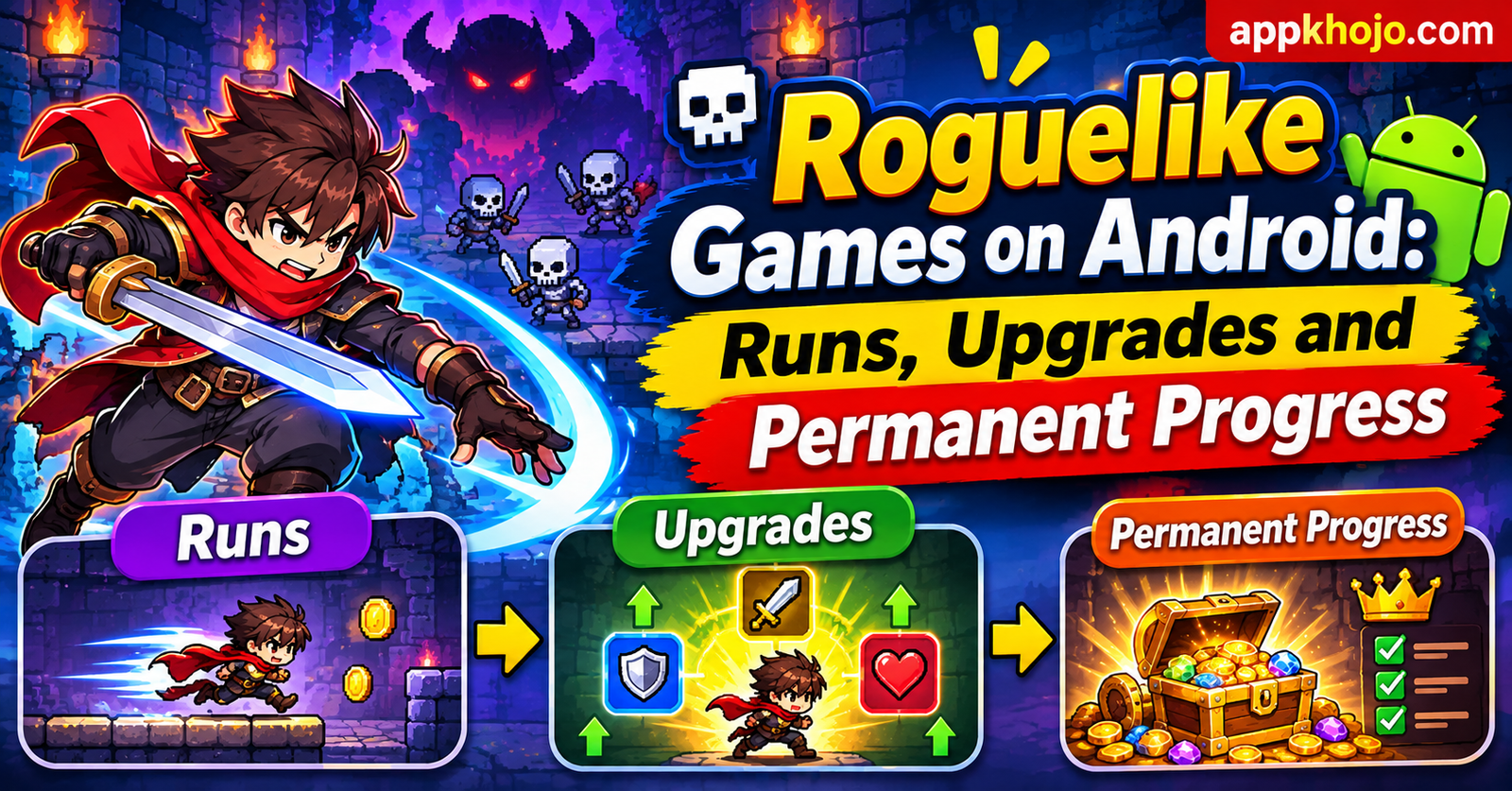
Learn how runs, random upgrades and permanent progress work in Android card, shooter and puzzle roguelikes, with habits that help beginners.
5 min read · Updated November 15, 2026 · By the AppKhojo team
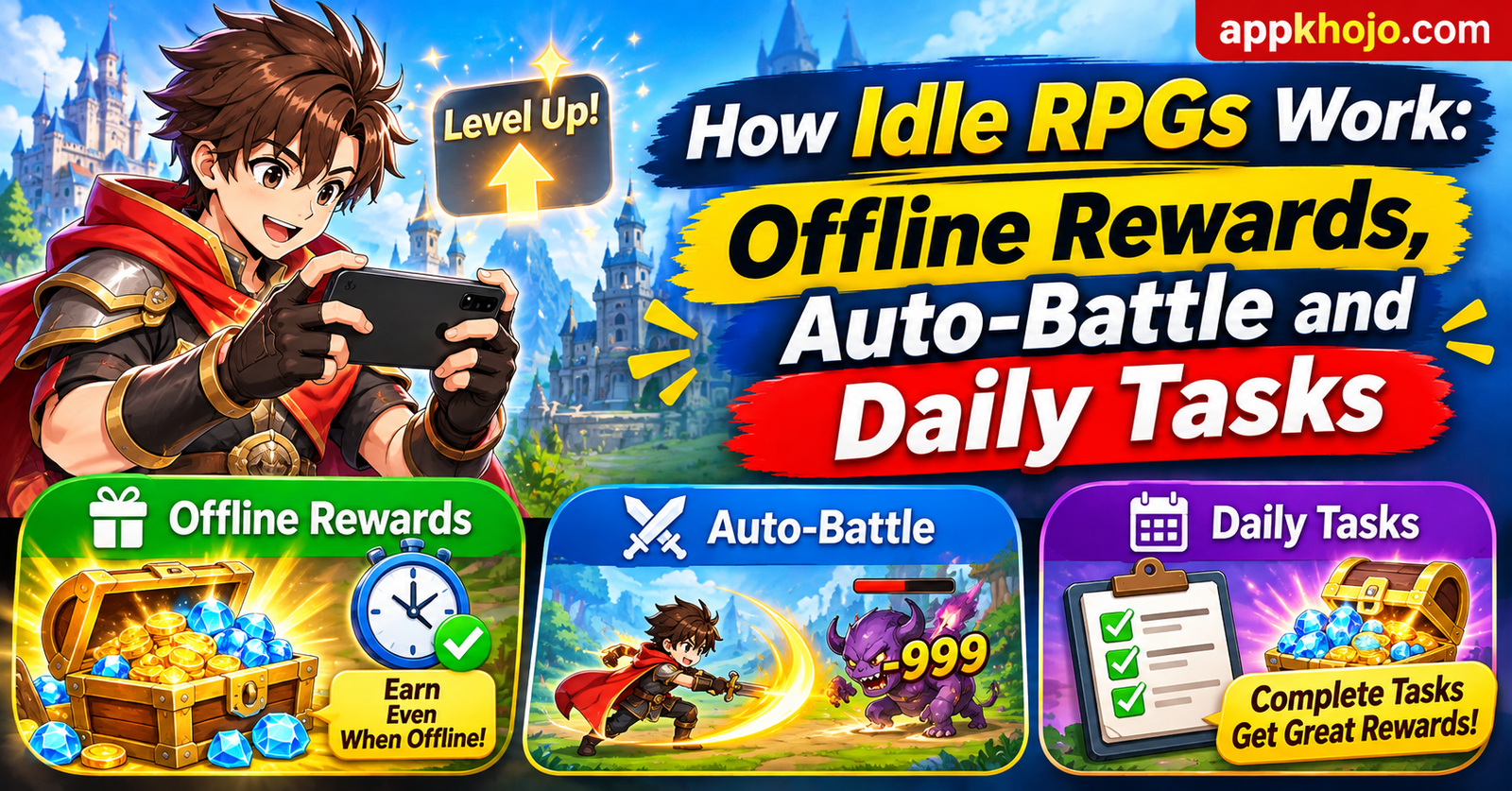
Idle RPGs have become one of the most common game types on the Google Play Store, and also one of the most misunderstood. The name suggests a game that plays itself, which sounds either wonderful or pointless depending on who you ask. The truth sits in the middle. An idle RPG hands over the moment-to-moment fighting to the game and keeps the decisions for you. Understanding which decisions remain, and how often they ask for your attention, tells you far more about whether a particular idle game suits you than any screenshot does.
In an idle or AFK ("away from keyboard") RPG, battles run automatically. You build a team, upgrade it and then watch it fight. The important part is that the game keeps calculating progress while you are away, so when you return you collect resources and see how far your characters have advanced. That is the "offline reward". It is not magic; it is the game applying a formula to the time you were gone, usually with a cap so that being away for a very long time does not give unlimited gains.
The cap matters more than most players realise. If a game stores offline rewards for twelve hours, checking in morning and evening captures nearly everything. If it stores two hours, you either check in constantly or accept that you are leaving progress behind. Before you commit to a game, find out roughly how long the reward bank lasts, because it sets your natural routine.
Since you are not controlling attacks, the choices that remain are mostly about preparation:
That makes an idle RPG feel more like running a team than playing an action game. If you enjoy comparing numbers, planning upgrades and checking progress in short visits, it can be very satisfying. If you want to feel every hit, it will frustrate you.
Most idle games build a routine around daily tasks: log in, claim rewards, use stamina or tickets, complete a few missions, then close the app. A good routine takes a few minutes. A bad one takes thirty and still leaves you feeling behind. Some games include an assistant function that completes repetitive tasks for you, which is a sign the designers are aware of the problem.
When you read a game's description, look for hints about the routine. Phrases such as "continues even when you log out" and "daily rewards" tell you progress is paced by time. Phrases about limited-time events tell you there will be periods when the game wants more of your attention than usual.
Because the core loop is automatic, idle games often earn money through speeding things up or adding random rewards. Typical examples are summon or draw systems for new characters, premium currency for extra stamina and passes that give a daily trickle of rewards. None of these is unusual, but they change how a game feels. Decide in advance whether you want to spend anything, and if so, set a limit. An idle game can be enjoyed without spending, but progress will be slower than that of players who do.
Several games in our directory use the idle or auto-battle idea in different ways, which makes them a useful comparison:
A few quick checks can save you a wasted evening:
Focus on a small core team before upgrading everyone. Claim idle rewards before they reach the cap. Spend stamina and tickets before they fill, since resources that are already full stop regenerating and are wasted. Work through the main story until the first features open up, then branch out to side content. If a game offers random summons, decide how many attempts you are comfortable with before you open the first one, not after.
They suit busy people, players who like collection and planning, and anyone who wants a game that fits around work or study. They are less suitable for players who want skill-based combat, fast competition or long uninterrupted story sessions. The best idle games respect your time; the worst turn "idle" into a checklist you feel obliged to complete.
An idle RPG is a game about preparation, not execution. Check how long its offline rewards last, how long the daily routine takes and how it earns money, and you will know within a few minutes whether it fits your life.
Keep reading
Learn how runs, random upgrades and permanent progress work in Android card, shooter and puzzle roguelikes, with habits that help beginners.

A star rating is not a verdict. Learn to read Play Store ratings, install ranges and recent reviews together before you download a game.

Phone hot or lagging during games? Learn how graphics presets, frame-rate limits, brightness and cooling habits affect performance and battery on Android.
Browse our game guides by genre and see what each one is really like.